Camp Words Explained: A Guide for Families
Visitors’ Day is here and whether you’re joining us on Johns or eagerly awaiting your campers’ return in a week, families are bound to hear many stories featuring all sorts of Camp Nor’wester lingo. The goal of this blog post is to give you a crash course in some of the terms you might hear thrown around by campers, staff, and alumni.
Anchor Day
Anchor Day is our reset day. It’s the closest thing Nor’wester has to a weekend. Anchor Day moves at a slower pace. The bells ring a little later in the morning and then campers have an extended time to clean up their living spaces while unit leaders meet to plan the schedule for the upcoming week. At 11:30, the camp gathers for Chapel before the main meal of the day at 1:00. “Dinner” is followed by Musicale and then Open Activities. The day ends with more unit time and a picnic dinner of Nosebags. (All of these terms are described below).
Big
Big Trips are 5-day/4-night trips for Navigators, Troubadours, Pathfinders, and Mountaineers. Big Trips include backpacking, biking, mountaineering, sailing, and canoeing. Trips are one of the few things we do that are truly mixed-unit. Campers are assigned to trips based on interest (and a variety of other factors).
Bletching
Bletch is pig food. At the end of each meal, the bletcher bletches leftover food and scraps from each plate and serving dish into one dish. A table’s bletch then gets added to the larger bletch bucket which is later fed to camp’s pigs.
Chapel
Visitors are often surprised to learn that Chapel at Camp Nor'wester isn't centered on religious instruction or undertones.
Instead, Chapel is a peaceful gathering where the community slows down together. Set in one of the most beautiful spots at camp, campers and staff come together to listen to stories, reflect on meaningful topics.
Hosted by a different unit each week, Chapel is a community gathering that calls on us to reflect on a specific topic. This summer’s Chapel topics have included authenticity, how to grow with friends, and self image. Chapel often includes personal reflection, some small group conversations, opportunities to share in front of the whole camp, and a song or two.
Chapel is also a location. Chapel Rock is the space where the gathering of Chapel happens each week, it’s located on the far northern end of the Airstrip and has excellent views of the outer islands, and southern Canadian Gulf Islands.
JOY
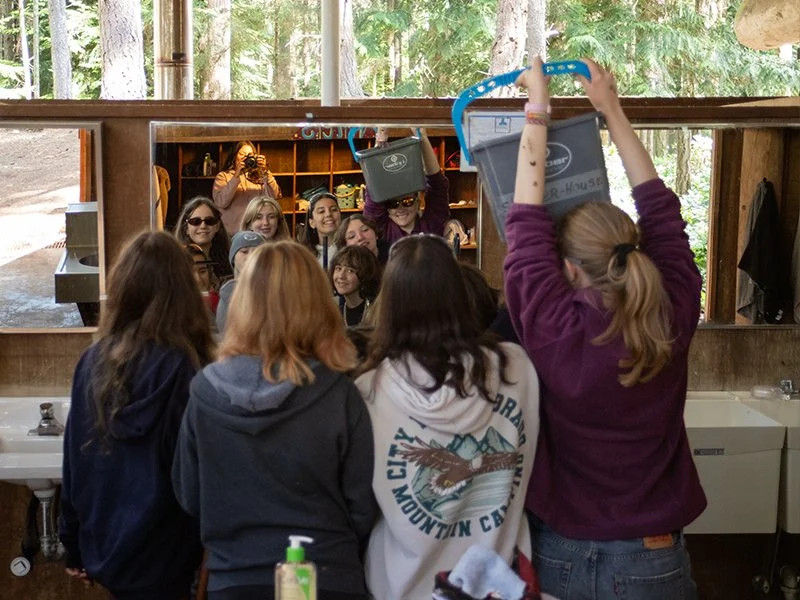
Not an acronym but often written all caps, JOY is the responsibility to clean the outhouses and showerhouses. Each unit does JOY weekly. The unit splits into two groups; one group cleans the outhouses on their side of camp and the other cleans their showerhouse.
Jumping
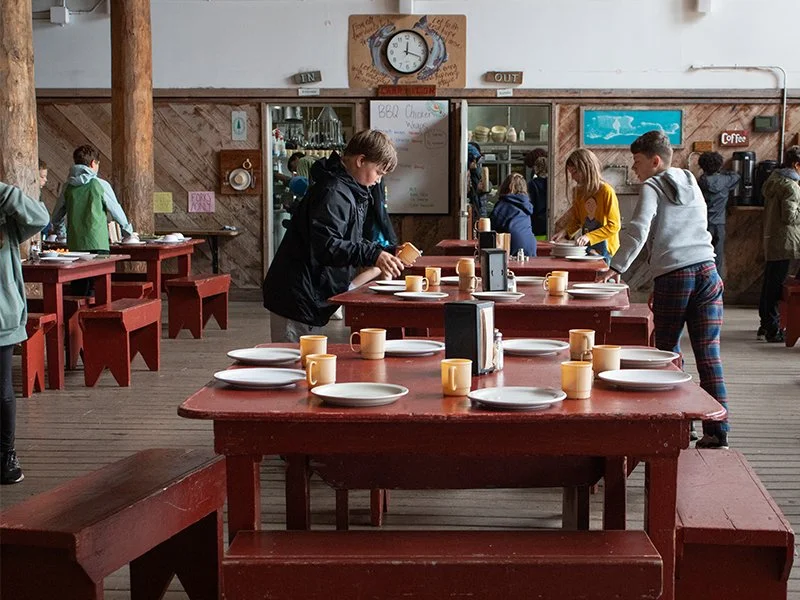
Jumping is the act of setting a unit’s table before the meal, getting food from the kitchen during the meal, and clearing the table after a meal. Jumpers are the campers assigned to complete these tasks for all meals in a day.
Jumping is done on a rotating basis so that all campers get a chance to help out. When it is their turn to jump, campers go to the Lodge early to set tables. To minimize traffic during the meal, only Jumpers go into the kitchen to jump the food (get hot items after grace or seconds when they’re available).
Little Big
Little Big Trips are 4-day/3-night trips for the Voyageurs, Wayfarers, Forsters, and Islanders. The exact trips may vary based on unit numbers but for this session, they were Kayaking, Sailing, Climbing, Hiking, Biking, and Community Service. Trips are one of the few things we do that are truly mixed-unit. Campers are assigned to trips based on interest (and a variety of other factors).
Musicale
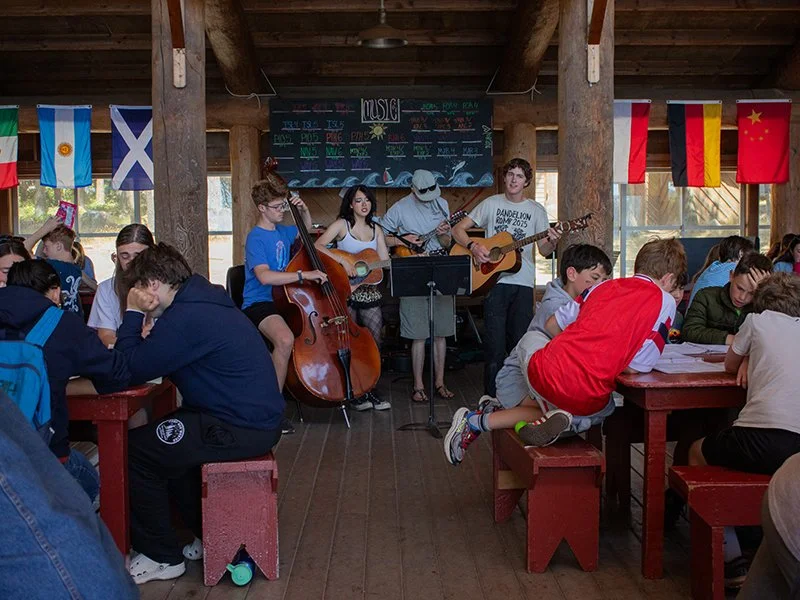
Each Anchor Day, Musicale is hosted in the Lodge; it’s an open mic setting that gives campers and staff an opportunity to share their musical and theatrical talents.
This isn't about putting on a polished production or finding the most talented performers. It's about having the courage to share something you've created, supporting your friends, and celebrating creativity in all its forms.
Some campers perform solo for the first time. Units put together group performances. Friends write original songs. Others simply get up on stage to make people laugh.
The audience is just as important as the performers. Every act is met with enthusiastic applause because at Nor'wester, showing up for one another matters as much as the performance itself.
NoFUSS
The core of Nor’wester’s schedule is built on NoFUSS, an acronym that stands for Nor’wester Flexible Unit Scheduling System.
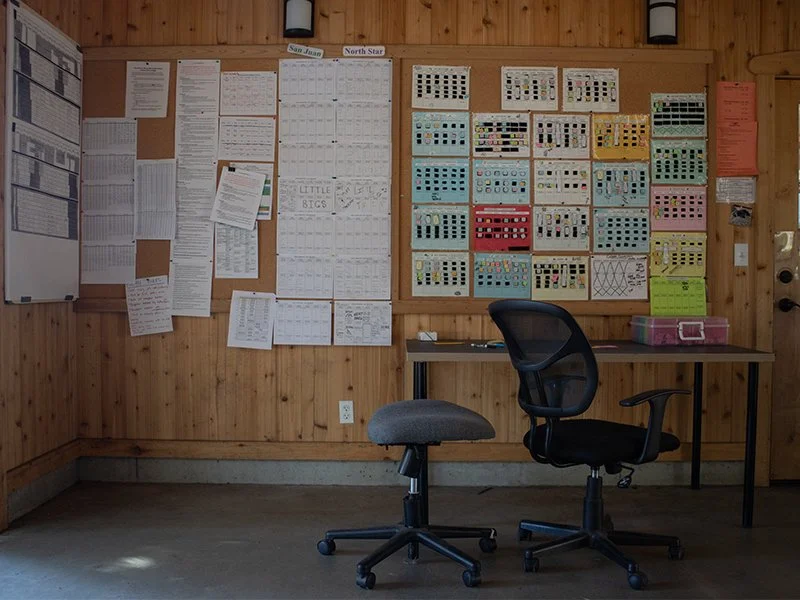
NoFUSS is an event: the meeting when the weekly schedule is made. One Unit Leader from each unit and all of the Department Heads gather to build a schedule based on unit interest, activity availability, and upcoming events.
NoFUSS is a verb: the act of creating the weekly schedule. It’s sometimes shortened to “FUSS”.
NoFUSS is a location: the room in the office where the scheduling meeting happens and unit and program schedules are posted for the week.
Nosebags
Nosebags are the Anchor Day evening meal. They are picnic meals consisting of PB&J sandwiches, cheese sticks, fruit, and of course Twix bars. Each week, units eat their Nosebags in a different location around camp. It’s a chance to enjoy our beautiful location and spend some concentrated time together as a unit.
Open Activities
Open Activities happen on Anchor Day afternoons and are a chance for campers to attend programming separate from the rest of their unit. Open Activities are also a chance for staff to offer something that might be outside of their immediate job description but that they’re excited to share with campers. Open Activities include a variety of options so that everyone has something that meets their needs. Examples include, open sailing, open archery, soccer, line dancing, silent reading, friendship bracelets, and more.
Packing Day
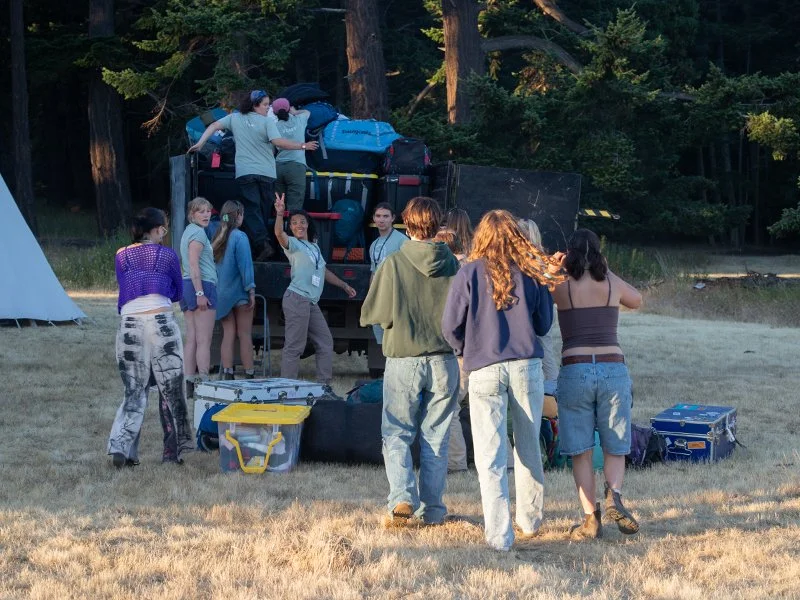
There are multiple Packing Days in a session. Each round of trips has a Packing Day during which the campers and staff on the trip works together for their upcoming adventures by packing their individual items, group gear, and food as well as going through safety procedures, starting to set group expectations, and more.
All camp Packing Day is the final day of the session. Campers not only pack all of their personal belongings but also take time to clean up spaces around camp and go through the lost and found. The night ends with singing some of the most popular songs and all-camp dance on Mission Point.
Singing
One of the first things new community members notice is that people are always singing.
Songs are woven throughout camp life. They're sung after meals, during campfires, while hiking, in units, during celebrations, and sometimes simply because someone starts one and everyone joins in.
Singing helps create a sense of belonging. When hundreds of voices join together, age differences disappear. New campers quickly learn that they don't have to know every word right away. Before long, the songs become familiar, and they're singing right alongside everyone else.
Many alumni say the songs stay with them for decades. Hearing one years later can instantly bring back memories of friends, adventures, and summers spent on the shores of the Salish Sea.
Specials
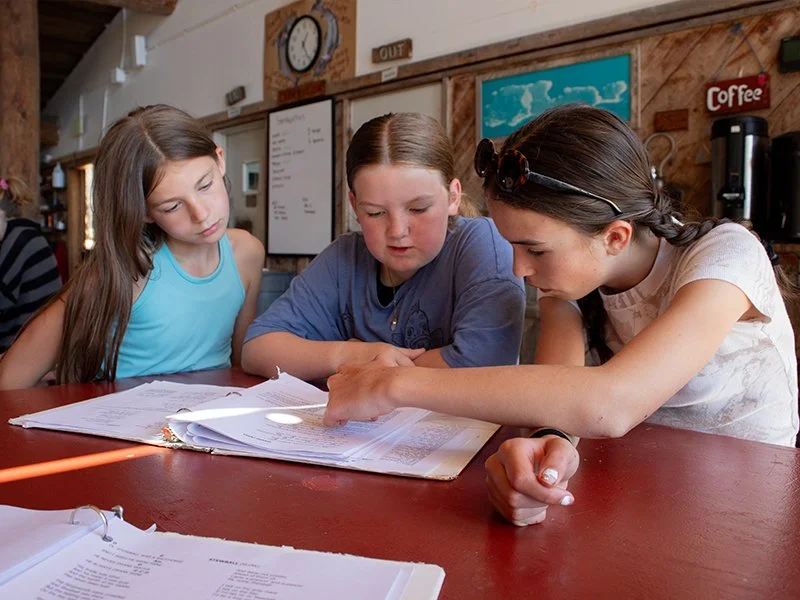
There are three types of Specials: Older Unit Specials, Younger Unit Specials, and Nell Day Specials. Like Open Activities, campers sign up for specials based on their own individual interests. Also like Open Activities, Specials are a chance for staff to lead campers in something that brings them joy. As the name suggests, these activities are a little more specialized. Some examples might include cake decorating, photography, chess, international staff teaching a traditional recipe in their home language, etc.
Wall of Sound
The Wall of Sound refers to the musicians who accompany the Lodge in singing after meals. While the exact members vary from meal to meal, the Wall of Sound is led by Music Staff. Campers and staff who have reached the point in their musical journeys that they are able to keep up are invited to join. While guitar is the most popular instrument, you’ll often find a banjo, ukulele, bass, piano, tambourine, fiddle, or other instruments in the Wall as well.